About the Cable Car
Wellington Cable Car is one of Aotearoa New Zealand's only historic funicular railway, situated at the end of the Cable Car Lane, off Lambton Quay in the heart of Wellington's central business district.
It provides a unique form of transport from the city to the suburb of Kelburn for locals and visitors alike.
The history
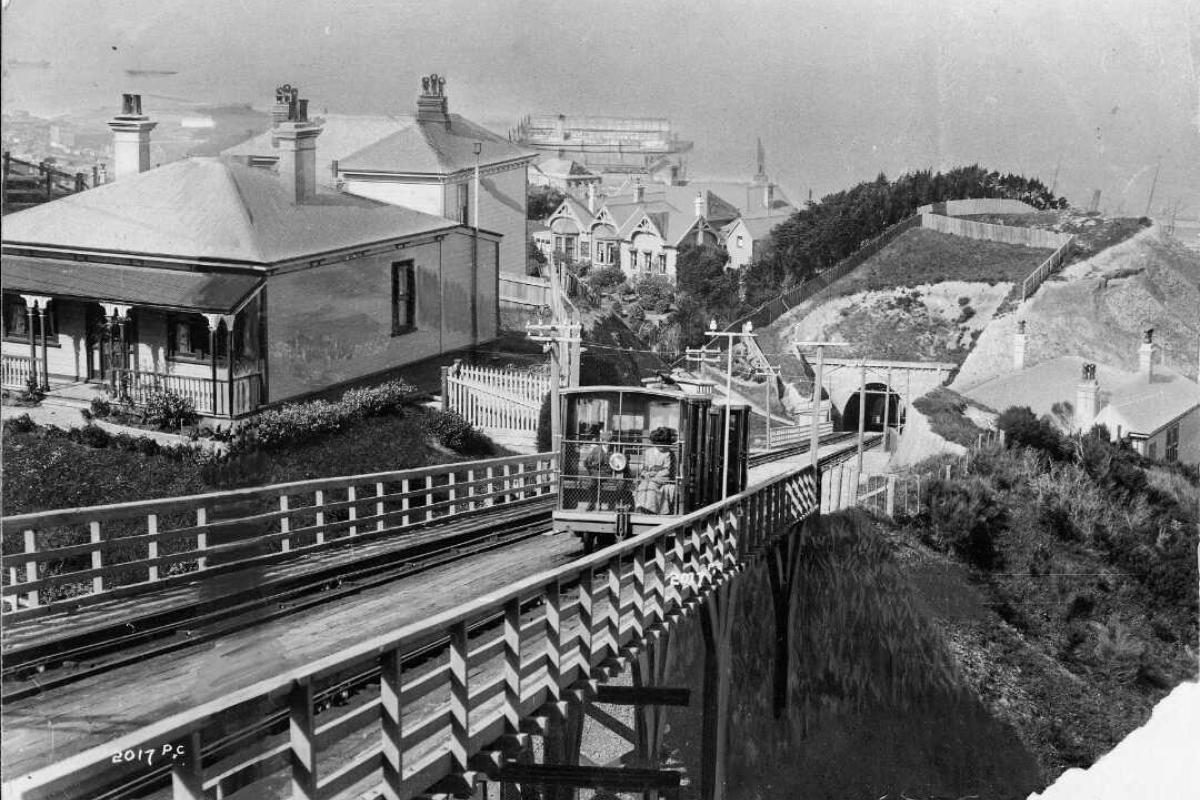
The Wellington Cable Car has been part of the city’s story for more than 120 years. Originally operated by the Kelburn & Karori Tramway Company, formed in 1889, the line officially opened in 1902 to help connect the growing hillside suburb of Kelburn with the Wellington CBD. The company was later sold to the Wellington City Council in 1947 and became part of the city’s passenger transport network.
In 1979, the original wooden red cars were retired and replaced with the larger modern fleet that are still operating today. Visitors can still step back in time at the Cable Car Museum, located at the top of the Cable Car journey, where two of the original cars have been carefully preserved alongside the original winding machinery room that once powered the system.
Following the deregulation of the bus industry in 1991, Wellington City Council sold its bus and trolleybus operations to the Stagecoach Group. The Cable Car and overhead trolleybus wire network remained in Council ownership, with Wellington Cable Car Limited established as a Council Controlled Organisation (CCO). Today, the little red cars continue to carry locals and visitors up the hill, blending heritage, engineering, and Wellington charm into one iconic journey.
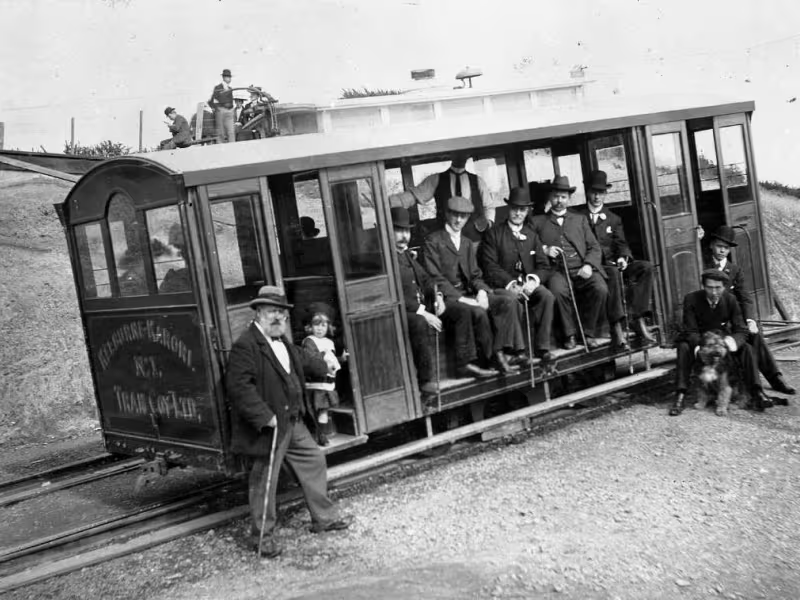
Opening Day, 22 February 1902.
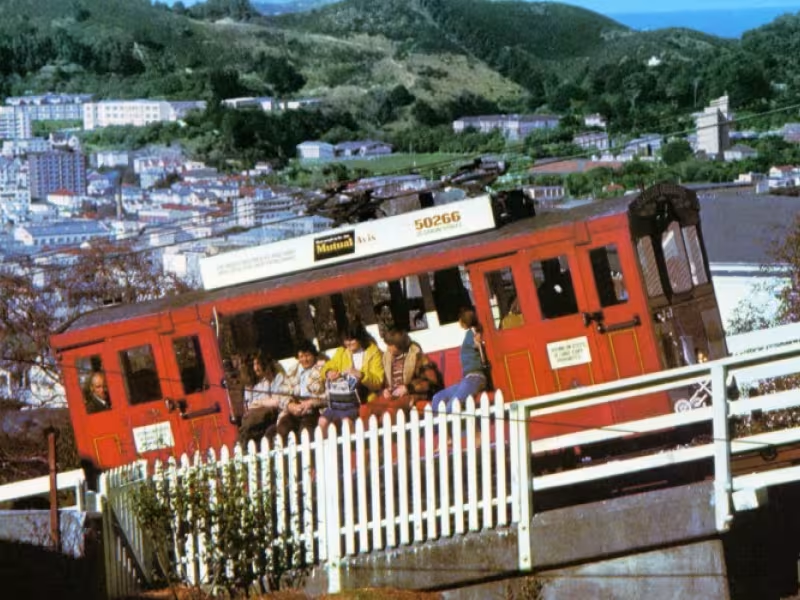
Vintage car in the 70's
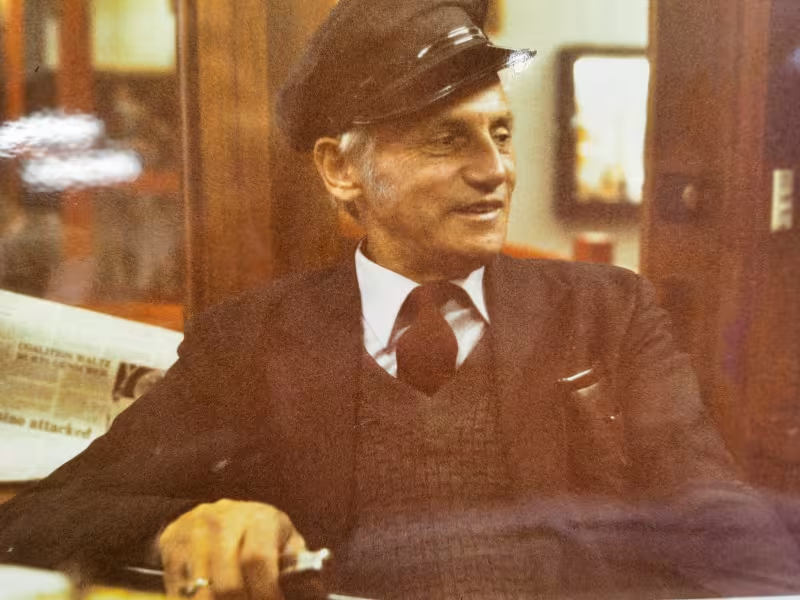
Ticket box operator of the past
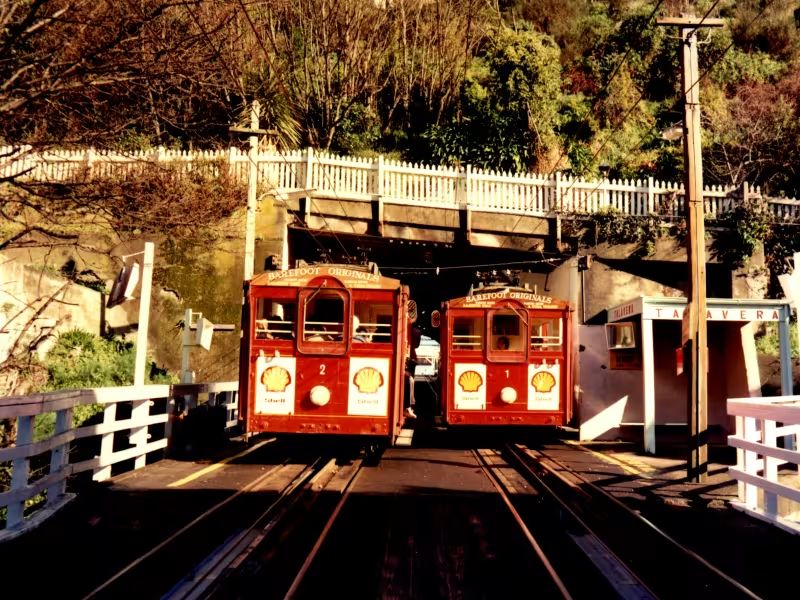
Vintage cars in the 1950's
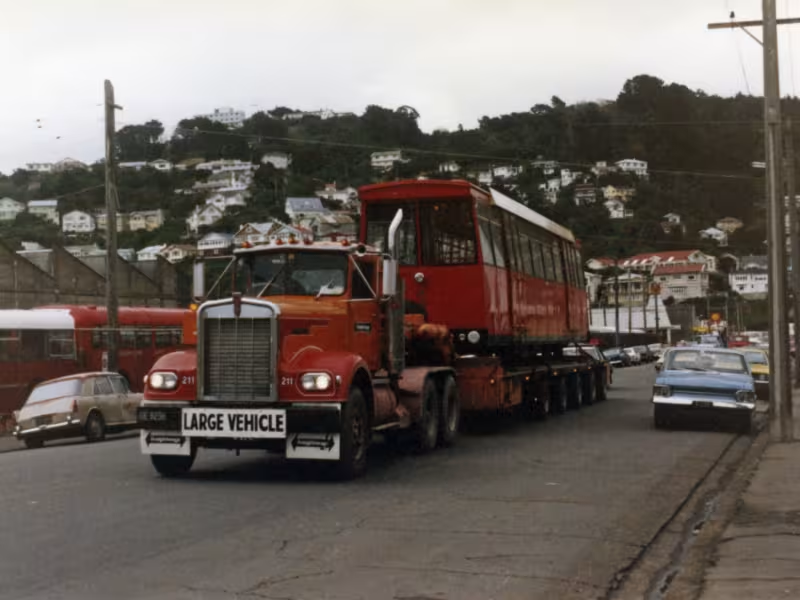
Current car being transported in 1979
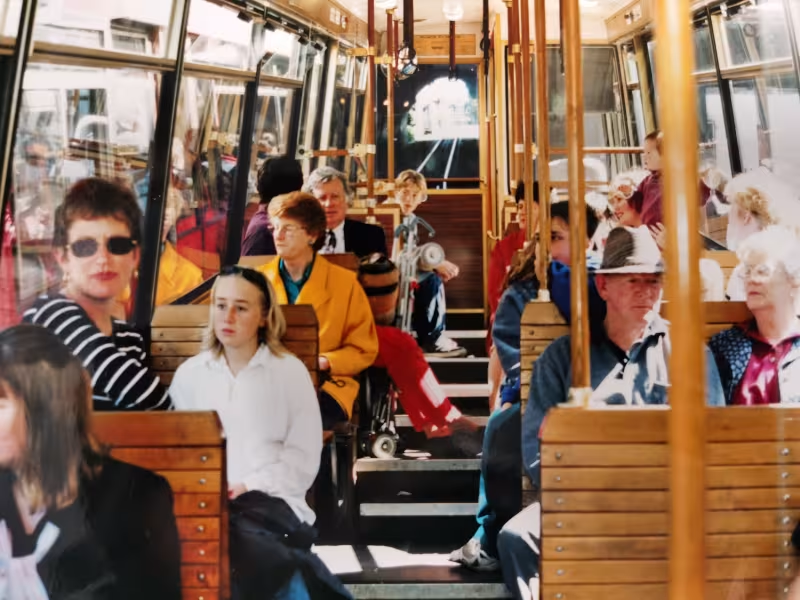
Current car inside, 1990's
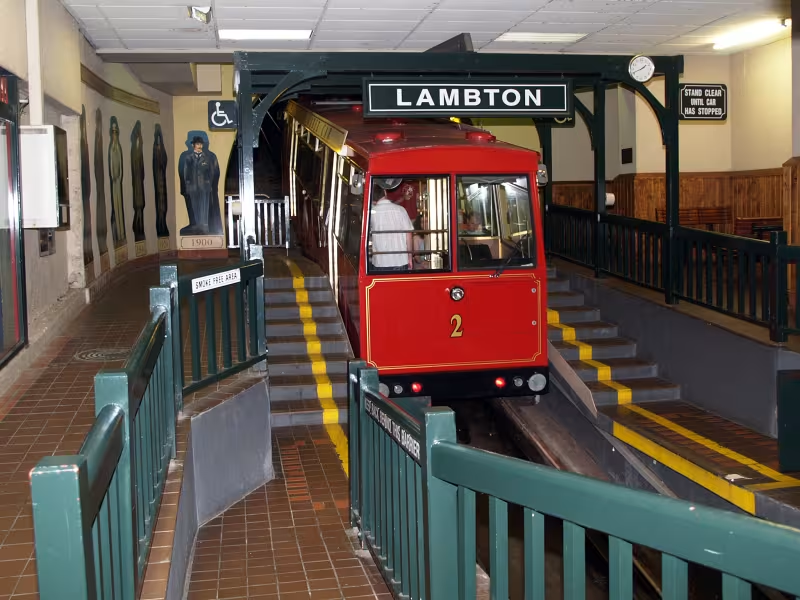
Lambton Quay Terminal, 2004
The engineering
The Wellington Cable Car is the last historic funicular railway in New Zealand, using a unique counterbalance system where two cars are permanently connected by underground cables and move in opposite directions along the steep hillside. Combining over a century of history with modern engineering, the system is designed to provide safe, smooth, and reliable journeys between the city and Kelburn every day.
The Cable Car also uses regenerative braking technology to improve energy efficiency across the network. As the cars slow down, or when more passengers are travelling downhill than uphill, the system generates electricity, which is exported back into the local power network as a distributed generator. This helps reduce energy consumption and wear on braking components, supporting the long-term sustainability of the little red cars.
Behind the scenes, our engineering and maintenance teams carry out daily, monthly, and annual inspections to ensure the ongoing safety and reliability of the cars, cables, tracks, and operating systems. Key components, including the haul rope, bogies, gripper brake, and mechanical systems, are regularly tested, serviced, and repaired. Each year, the Cable Car also undergoes an annual maintenance shutdown, where services pause for at least one week to complete larger-scale engineering works that cannot be carried out during normal operations.
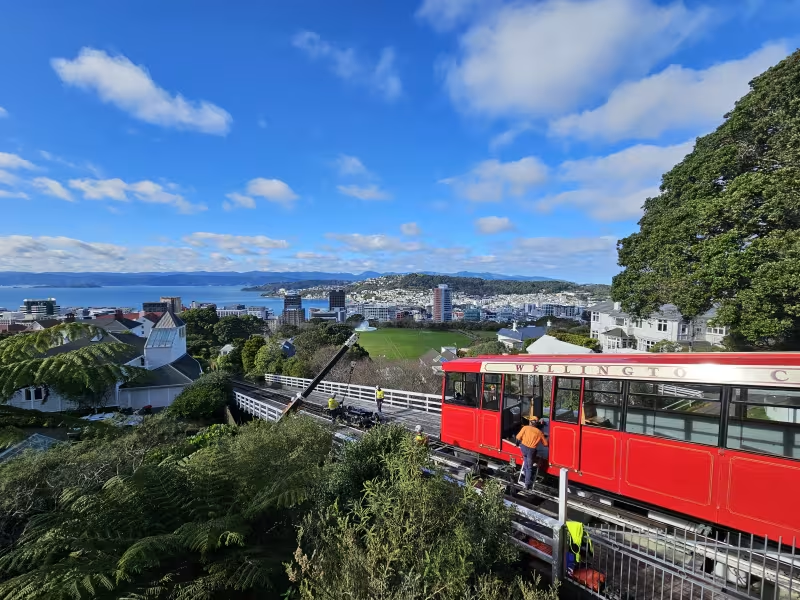
Annual Maintenance Shutdown
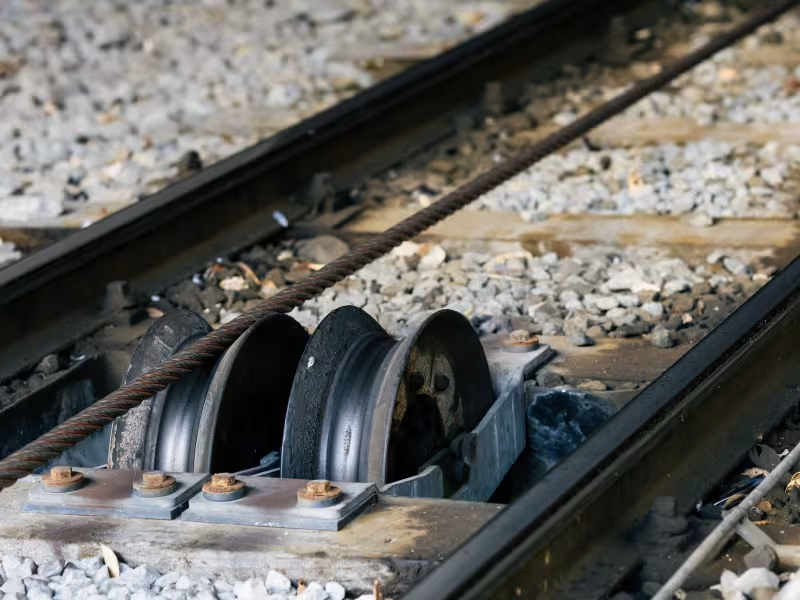
Rollers on the track
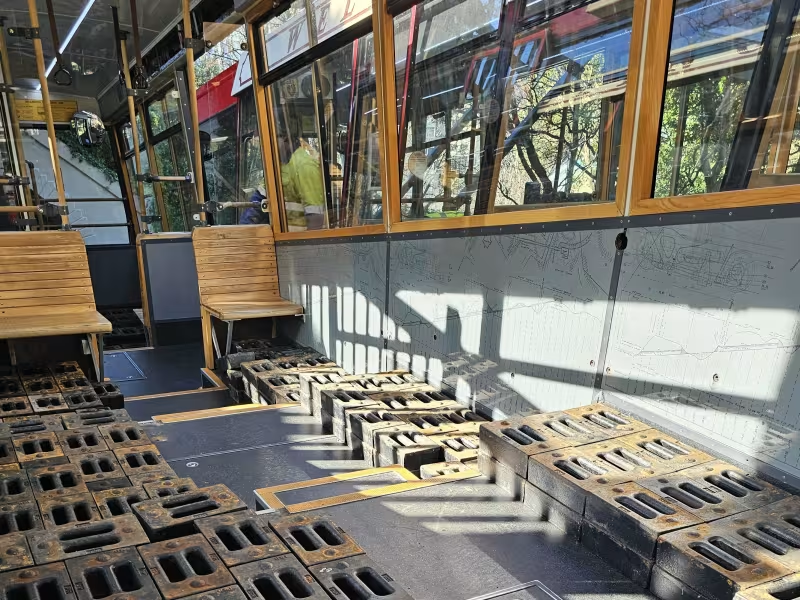
Weighted car for the Gripper Brake testing
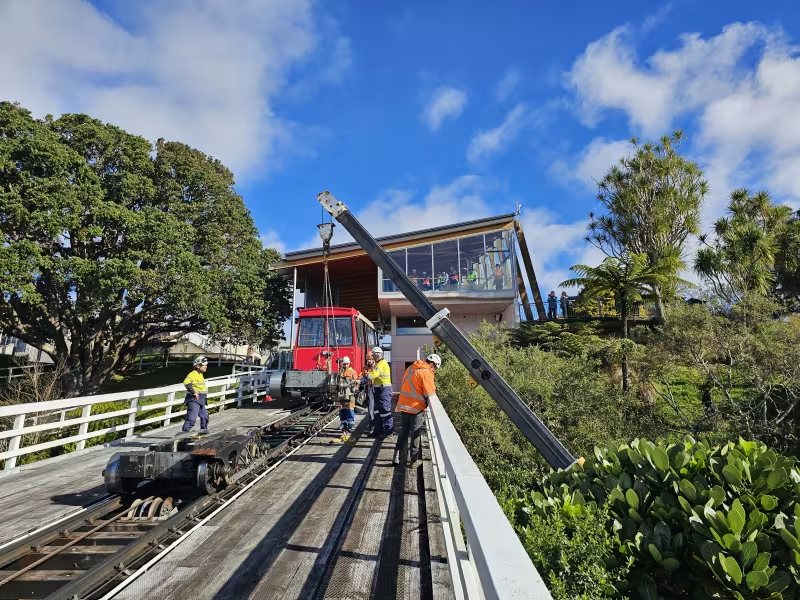
Boogie change
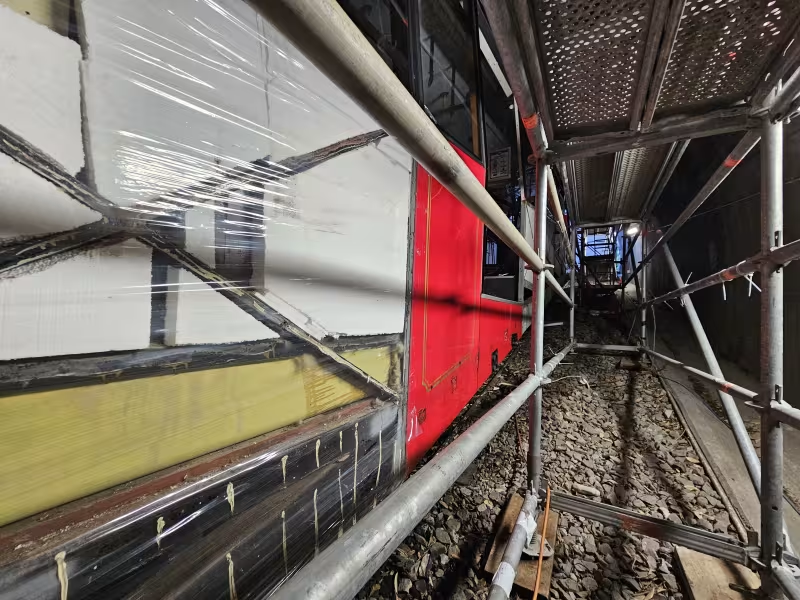
Car 2 panel repairs
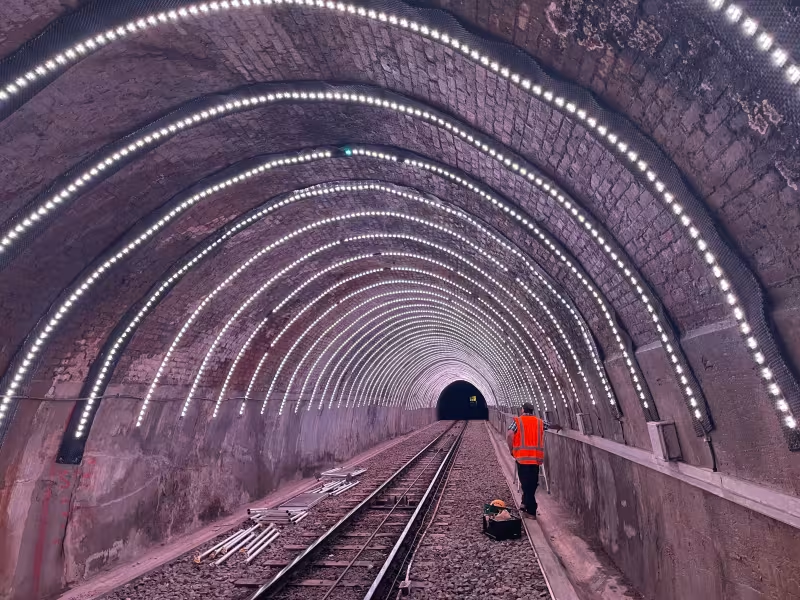
Maintenance on the tunnel lights
The tunnel lights
Our tunnel light shows are one of the Wellington Cable Car’s most iconic and talked-about features, transforming the ride into an immersive experience of light, colour, and movement. Originally launched as a temporary installation in 2014, the display became a permanent attraction following overwhelming public support and now features 45,000 LED lights across both the middle and top tunnels.
Today, the lights continue to delight locals and visitors alike, while also providing a platform to celebrate public holidays, community events, charities, and local causes throughout the year. For the best view, look uphill from the Cable Car landings or nearby station platforms as the lights travel through the tunnels.
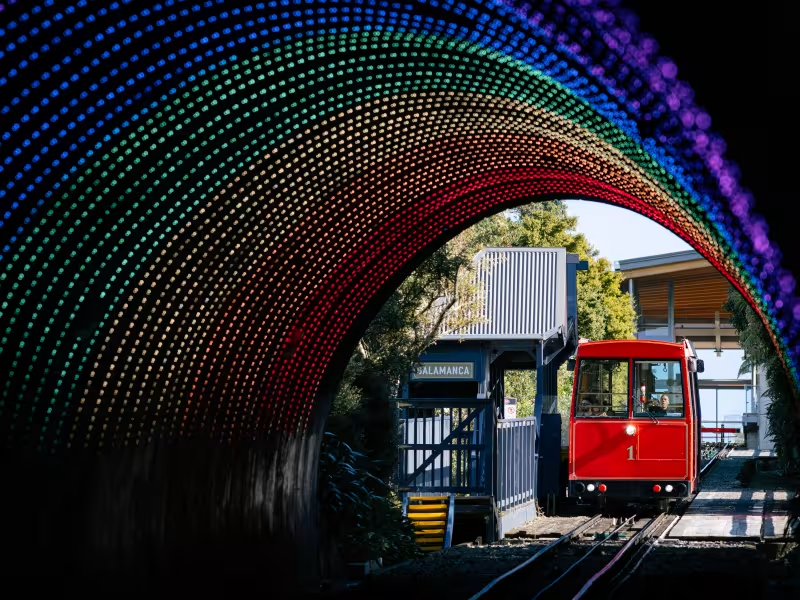
Tunnel lights
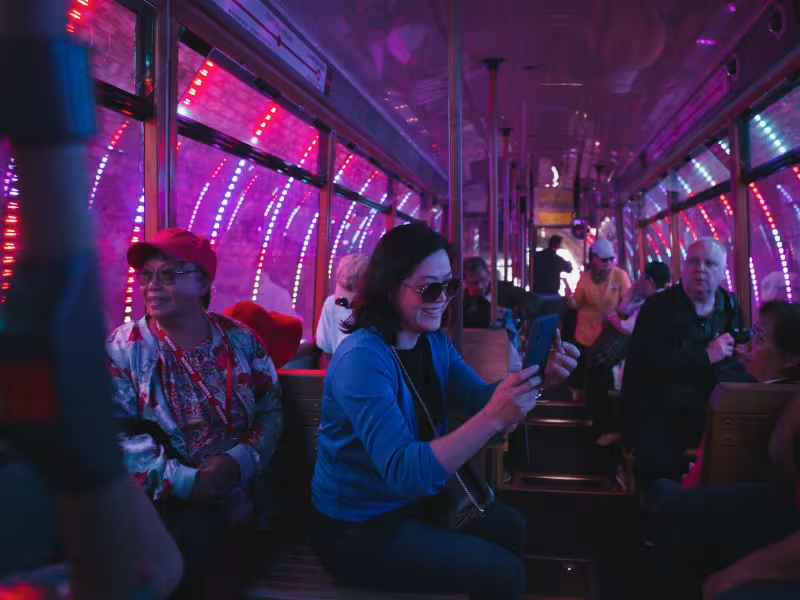
Visitors enjoying the tunnel lights
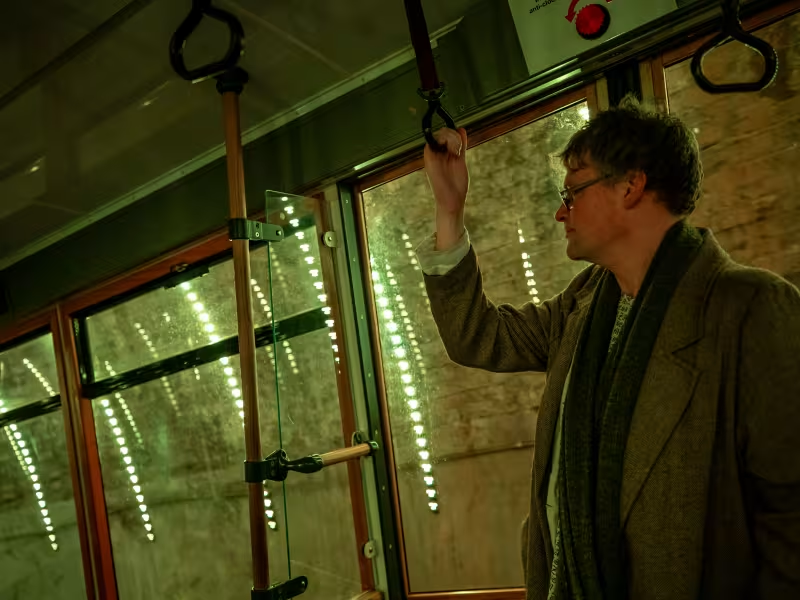
Daily commute through tunnels
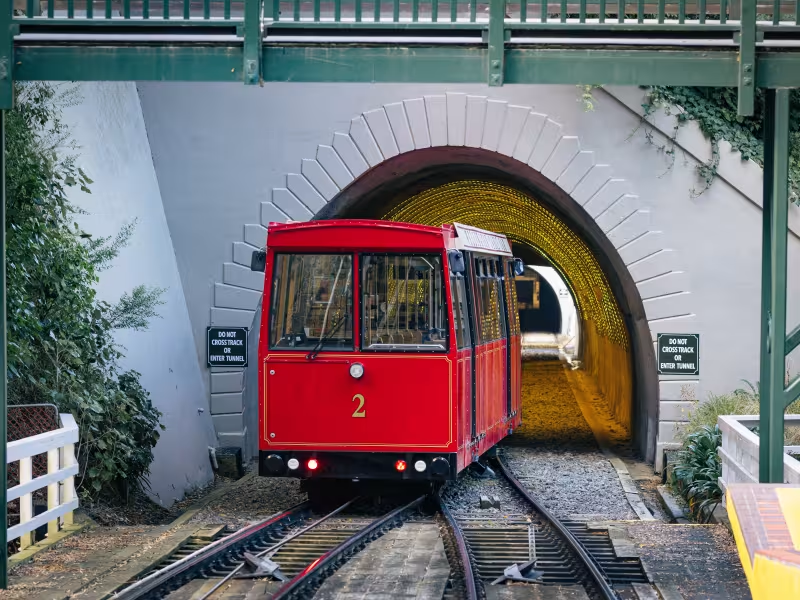
Yellow tunnel
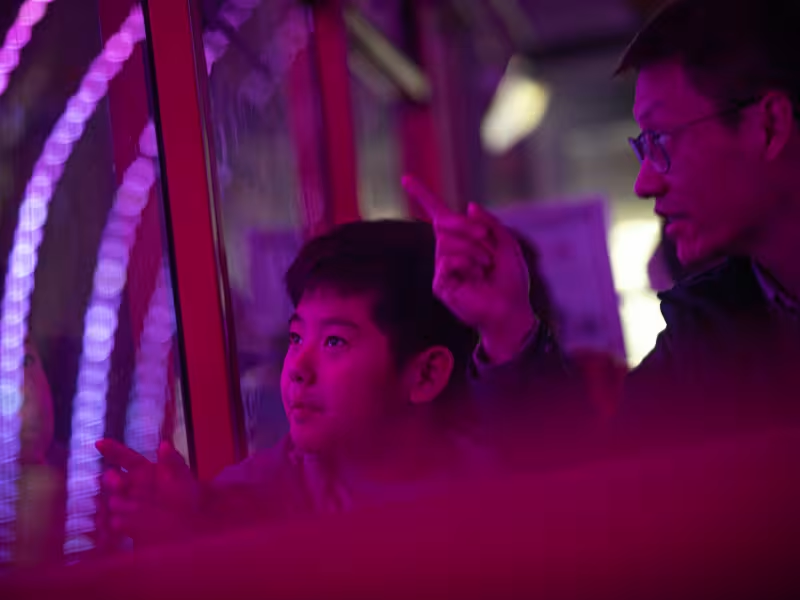
Family enjoying the tunnel lights
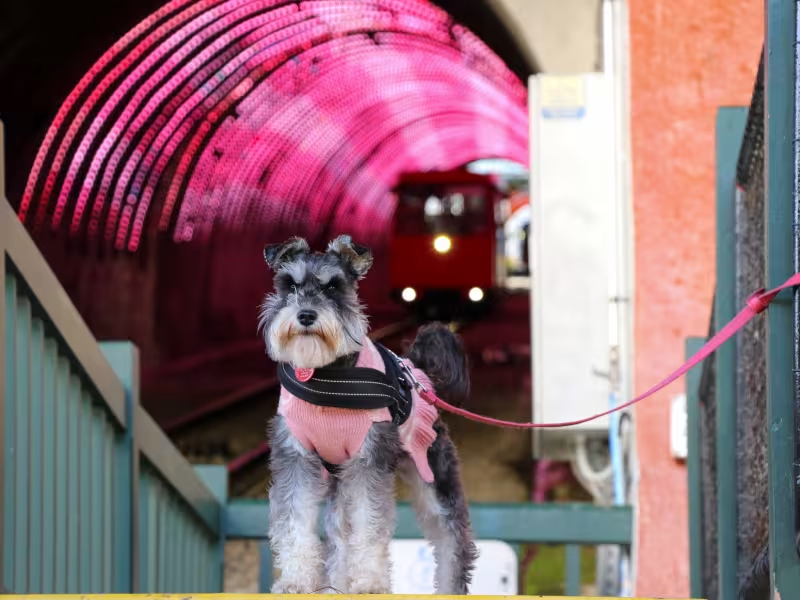
Miss March: Delilah
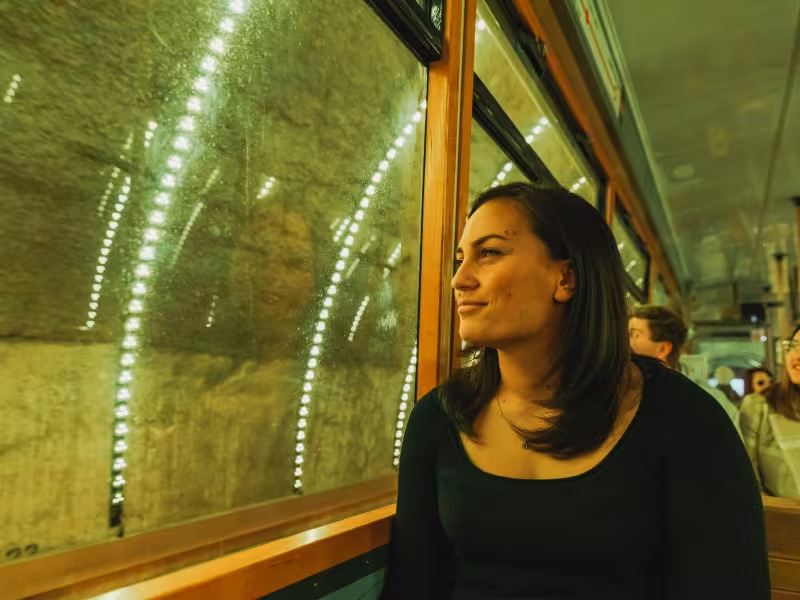
Tunnel lights
Community and identity
The Wellington Cable Car has been part of the city’s story for generations, carrying locals, commuters, students, and visitors up the hill since 1902. For many Wellingtonians, the little red cars are more than just transport; they’re tied to memories, routines, milestones, and family traditions passed down through generations. From grandparents sharing stories of riding the Cable Car as children to today’s passengers introducing it to the next generation, the Cable Car continues to hold a special place in the city's heart.
We’re proud to use our platform to support the Wellington community through collaborations, events, and local initiatives that bring people together. Whether it’s celebrating community organisations, supporting causes such as Blind Low Vision NZ through initiatives like our Dogs of the Cable Car Calendar, or helping shine a light on important campaigns and events through our tunnel light displays, we love finding ways to connect the cars with the people and stories that make Wellington unique.
We also recognise the importance of protecting both our environment and the historic landscape the Cable Car travels through. From energy-efficient engineering systems such as regenerative braking to carefully planned maintenance and infrastructure works, we take a conscious approach to reducing our environmental impact while preserving the heritage and character of the hillside surroundings. In 2022, bird-friendly dots were installed on the Kelburn Terminal windows to help reduce native bird strikes, reflecting our ongoing commitment to creating a safer environment for Wellington’s local wildlife while the Cable Car operates.
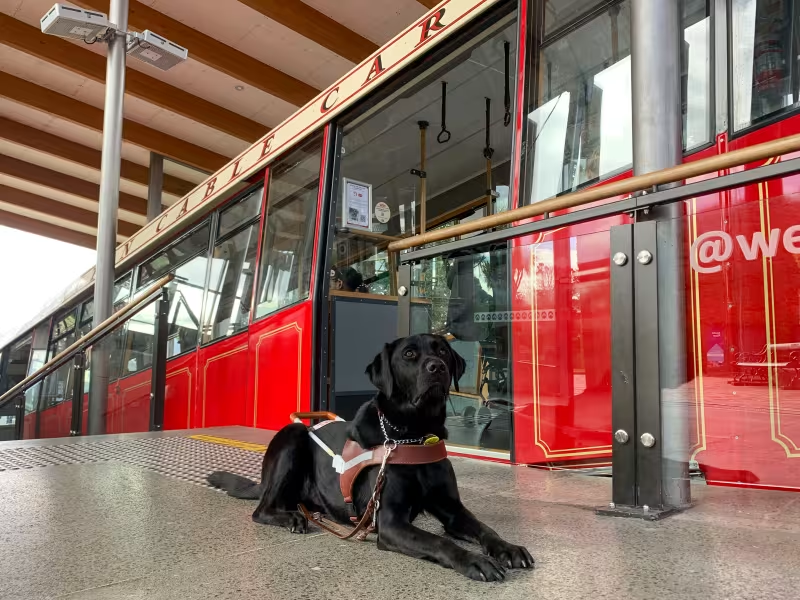
Guide Dog Yale
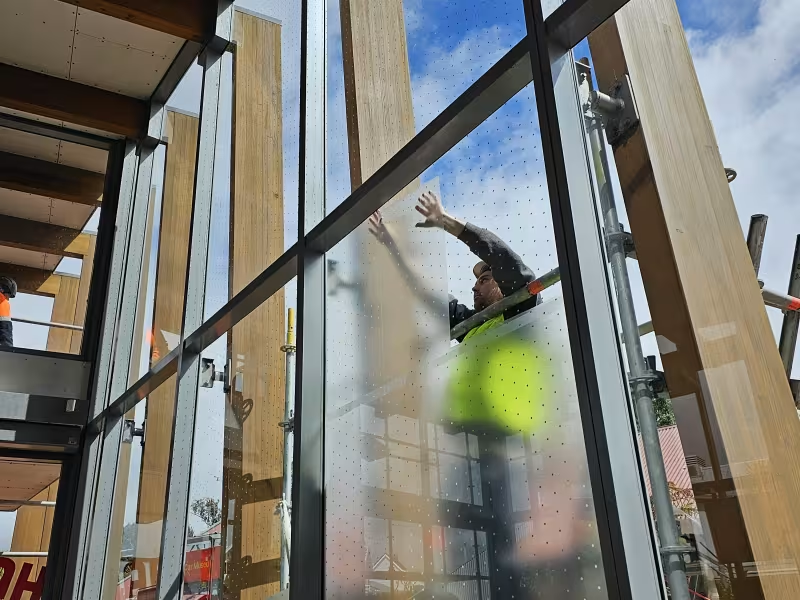
Bird dots application
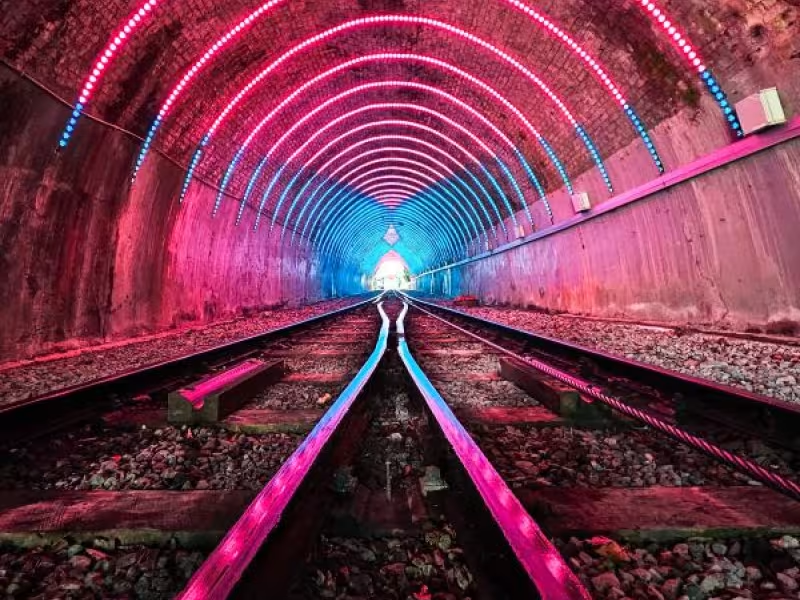
Matariki tunnel light display
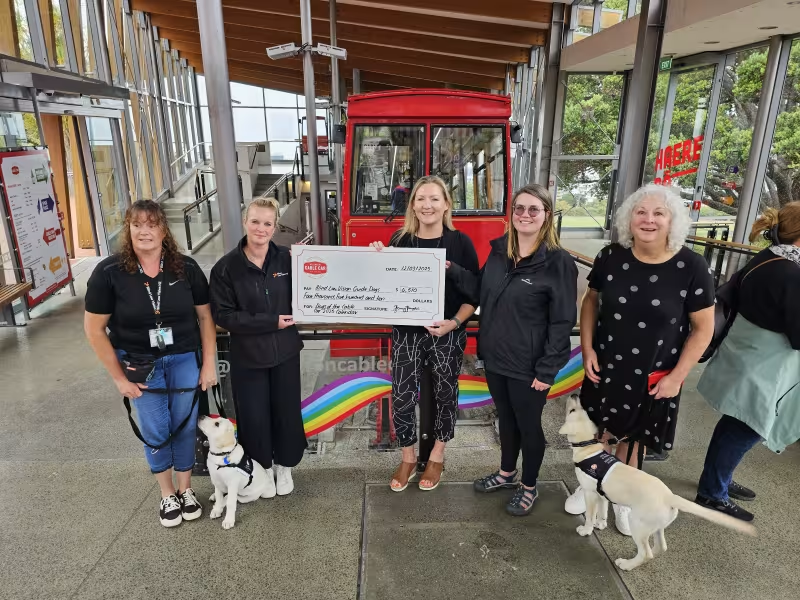
Dogs of the Cable Car calendar donation to Blind Low Vision
The rich timeline
1889
The Directors of The Upland Estate Company set up The Kelburn & Karori Tramway Company to provide transport facilities in the form of a Cable tram between their proposed residential subdivision at Kelburn and the City.
1899
Work on the tram line begins. Three shifts worked around the clock to construct the system, including digging 3 tunnels.
1902
Work is completed, and the Cable Car starts operation on 22 February 1902 and proves an instant success with over 425,000 passenger trips on the cable car in the first year.
1904
The company purchases 3 old palace horse trams and converted them into trailer carriages to increase passenger capacity. A Tea kiosk is built at Kelburn on the site that is now occupied by the Cable Top Eatery.
1905
The converted palace trams are added to the grip cars on the uphill side. This increases capacity to 62 seated passengers.
Kelburn Park and the Dominion Observatory are completed.
1933
Electricity replaced steam in powering the winding gear. The smokestack which had been a Kelburn landmark from the start, is removed.
1935
The slipper brakes are removed from both trailers – a move which would prove to have serious ramifications 40 years later.
1941
The company accuses the council of running buses in direct competition and asks the council to purchase the company or stop competing. Council refuses to purchase, claiming ageing stock and limited potential earnings.
1946
Still claiming unfair competition, the Company takes its case to the Supreme Court. The Council agrees to purchase the Company. The Kelburn and Karori Tramway Company was voluntarily dissolved in February 1947.
1973
A serious accident involving a construction worker working on the new inner-city motorway, who accidentally stepped in front of a cable car. Incident leads to a Ministry of Works investigation.
1974/5
There were several upgrades to the system, and the trailer carriages were removed. However, despite these modifications, the Ministry of Works advised that the cars only have a maximum lifespan of a further 10 years. The council decides to invest in a new fully automated system.
1977
Tenders close for new cable car system, and the contract is awarded to Habeggar AG of Switzerland.
1978
On 22 September 1978, the vintage cars made their final run.
1979
The original Grip Cars 1 and 2 have been removed. Renovations begin in preparation for a new line. Rebuild of the system included relocating the winding system, track re-gauging, new cars, and control. The new cable car system opened on 20th October.
1987
The control system was replaced after several years of the system being unreliable and passenger numbers dropping as a consequence.
1991
Following deregulation of the bus industry, the Cable Car ownership and that of the overhead power network for the trolleybuses passed to the Wellington Cable Car Limited, a council-controlled organisation. Harbour City Cable Car Limited won the tender to operate the Cable Car. Stagecoach won the tender for the maintenance contract.
2013
The Kelburn terminal is rebuilt to include an internal viewing deck. It was officially reopened on 14 February 2014.
2014
Tunnel lights were offically installed in the upper and middle tunnel after a successful trial during the Power Plant light festival.
2016
Wellington Cable Car closes temporarily to undertake a major equipment upgrade to replace the electric drive and control system. Since the 1979 upgrade, each car has completed more than one million trips. The Cable Car also took the opportunity to cosmetically upgrade the existing cars and make changes to the staff facilities.
2021
After a month's trial, the Cable Car welcomed dog's permanently to travel up the hill.
2022-2024
After numerous bird strikes, at least 90% of the Kelburn Terminal is installed with Feather Friendly bird dots on the glass windows. This was the first building in New Zealand to be covered in the technology, and it is still the largest building with the dots in the country.
Awards and accomplishments